

Forte Partners is focusing its investments on U•Center 3, the most complex mixed-use project carried out by the company so far. The new development in the Tineretului area will include approximately 14,500 sqm of office space, around 200 apartments, and 2,200 sqm of retail spaces, organized around a public square.
The office building will integrate advanced energy efficiency and digitalization solutions, being designed in accordance with nZEB standards and targeting LEED Platinum certification. With a portfolio including projects such as The Bridge, Aviației Park, Millo Offices, Tandem, and the first two phases of U•Center, Forte Partners prioritizes the completion of U•Center 3, and for 2027 it is preparing to advance the planning and authorization stages of new developments.
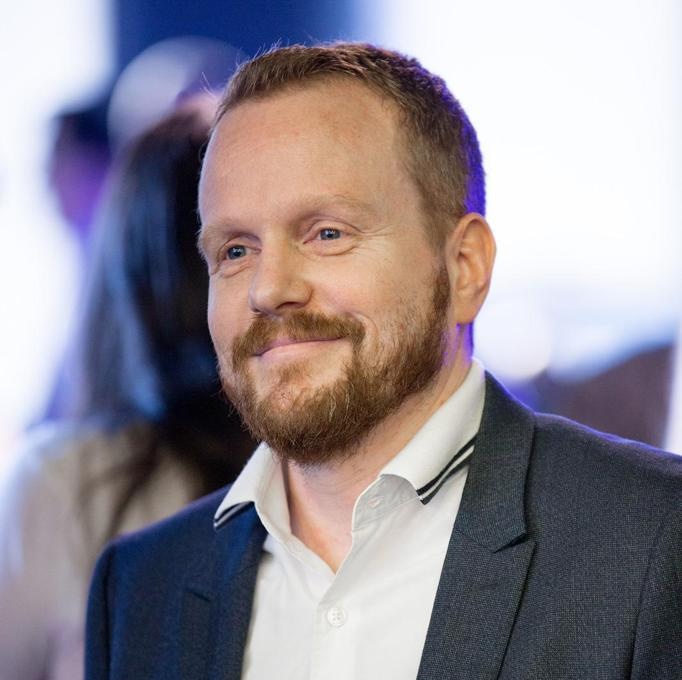
Stephen Burke, Group Development Director at Forte Partners and a team member since the company's inception, presents the investment strategy, office market outlook, and the challenges faced by real estate developers.
- How do you assess the evolution of the office building market in Romania in 2026? What changes do you notice in tenant demand regarding spaces, amenities, and locations?
- The office market in Romania continues to be marked by a clear orientation towards quality buildings. Companies remain active, but leasing decisions are increasingly concentrated in projects that offer excellent accessibility, high sustainability standards, and an attractive working environment. Data from the first nine months of 2026 indicates an increase in net demand compared to the same period last year, showing that firms continue to make expansion and relocation decisions despite a difficult economic context. At the same time, tenants have become more selective. Location, building performance, and the experience offered to employees are now decisive criteria in the leasing process. Accessibility remains one of the main factors influencing demand. Most transactions concluded this year targeted buildings within walking distance of a metro station, confirming that access to public transport has become essential for office space occupants.
Demand continues to be driven primarily by technology companies, followed by those in energy, industry, and financial services. Many of these organizations have ambitious ESG targets and are looking for office buildings that support their sustainability commitments.
The hybrid work model has also influenced office space requirements. In general, companies are leasing smaller areas than in previous years, but they are not willing to compromise on quality. The focus has shifted from space size to its efficiency and functionality. Today, tenants expect internationally recognized sustainability certifications such as LEED or BREEAM, a high indoor environmental quality, advanced building management systems, and a reliable digital infrastructure to support ESG reporting and operational efficiency. At the same time, mixed-use projects are attracting growing interest, as employees appreciate easy access to retail, services, and various urban amenities throughout the day.
- Present the main features of the U•Center 3 project and the investments prepared by Forte Partners for the upcoming period.
- Currently, our main objective is the development of U•Center 3, the next stage in the evolution of the U•Center campus and the most complex mixed-use project carried out by Forte Partners to date. The project will include approximately 14,500 sqm of office space, around 200 apartments, and 2,200 sqm of retail spaces, organized around a public square. The project capitalizes on the success of the U•Center 1 and U•Center 2 phases, which demonstrated the benefits of combining high-quality office spaces with excellent metro access and ground-floor retail functions. U•Center 3 completes this vision by integrating the residential component and creating a more balanced urban environment better connected to community needs. The office building is designed as an entirely electricity-powered property, complying with nZEB standards, and will integrate heat pumps, a centralized building management system (BMS), smart lighting adapted to natural daylight, and rainwater reuse solutions. The project targets LEED Platinum certification, in line with the standards already achieved within the U•Center development.
Beyond U•Center 3, we continue to analyze new mixed-use development opportunities in Bucharest, especially in areas that benefit from solid public transport infrastructure and high long-term urban development potential.
- To what extent do construction costs, financing conditions, and rent levels influence the launch of new projects? What are the main difficulties for developers?
- Construction costs have represented the main challenge for the real estate development sector over the last three years. Although their growth rate has moderated, the market still operates at a significantly higher level than before. In many situations, construction costs have grown at a faster pace than rents, which has put pressure on development margins. Our response has never been to lower quality standards. On the contrary, we place special importance on the design phase, where the most important technical and commercial decisions are made. Well-thought-out and integrated solutions from the early stages of the project generate much greater value than modifications made during execution.
Financing requirements are also constantly changing. Institutional investors are paying increasing attention to projects that demonstrate solid performance in terms of sustainability and energy efficiency. In this context, alignment with EU Taxonomy principles is rapidly becoming a baseline condition rather than a competitive advantage.
The market also faces a low level of new supply. Office space deliveries remained limited in the first nine months of 2026, while demand continued to grow. This trend should support a high occupancy rate and create favorable conditions for well-positioned projects.
However, the regulatory framework remains the most important challenge. Investors need visibility and predictability when making long-term decisions. More efficient authorization procedures and a more stable urban planning framework would significantly contribute to increasing Bucharest's attractiveness for real estate investments.
- How have office building requirements changed with the expansion of hybrid work? What solutions are you adopting for flexibility, comfort, digitization, and operational efficiency?
- The hybrid work model has changed company expectations, but not the importance of the office as a workspace. The most attractive buildings today are those that offer a quality experience and support employee collaboration, productivity, and well-being. Indoor environmental quality has become an essential criterion in the office space selection process. Natural light, thermal comfort, acoustics, and air quality directly influence leasing decisions. Flexibility is equally important. Buildings must respond to continuously changing business needs, offering tenants the ability to adapt their spaces without major structural interventions.
Within U•Center 3, digitalization is integrated starting from the design phase. The project will include advanced building management (BMS) functionalities, energy consumption monitoring systems, smart metering, and the infrastructure required for data collection and ESG indicator reporting. When these systems are foreseen from the design stage and properly implemented, they significantly contribute to increasing operational efficiency and reducing operating costs.
- How do sustainability requirements and the transition from nZEB to ZEB reflect in Forte Partners' strategy? What technologies do you use for energy efficiency and emission reduction?
- At Forte Partners, sustainability is integrated into the development process from the very early design stages. This approach influences every important decision and ultimately determines the long-term performance of the building. U•Center 3 reflects this strategy. The office building is entirely powered by electricity, complying with nZEB standards, using heat pumps as the primary source for heating and cooling. Additionally, it will integrate a centralized building management system (BMS), smart lighting adapted to natural daylight, and rainwater reuse systems. The decision to eliminate gas infrastructure has both environmental and operational motivations. Fully electrified buildings, supported by efficient heat pump-based technologies, represent a viable and future-oriented model for urban office developments. Real-time energy consumption monitoring gives tenants a clearer picture of how they use resources and helps them meet increasingly complex ESG reporting requirements. The transition toward ZEB standards is already influencing how we design new developments. Our goal is not only to meet current requirements but to create buildings capable of maintaining high sustainability performance throughout their entire lifecycle.
- What are Forte Partners' priorities for the end of 2026 and what development objectives do you have for 2027?
- Our priority is the successful completion of the U•Center 3 project, alongside evaluating new development opportunities. At the same time, we are strengthening our internal construction management capabilities to have better control over project delivery, quality standards, and cost management. Looking toward 2027, our objective is to advance the next stages of our development portfolio by continuing planning and authorization processes, thereby ensuring the continuity of the growth trajectory that has characterized the company over the past decade.
- What prospects do you anticipate for the Romanian office market in the 2027-2030 period? Where will the main opportunities for investors and developers be concentrated?
- The medium-term prospects for the Romanian office market are positive. The main indicators recorded in 2026 outline a healthier market environment characterized by increasing net demand and a low level of new supply. A growing share of leasing activity is generated by relocations, expansions, and newly entered companies on the market, reflecting occupants' continued confidence in their business development prospects. Demand is increasingly focused on modern buildings that offer high sustainability standards, excellent accessibility, and superior technical performance. At the same time, the pace of new project deliveries remains relatively low. Although new developments are expected in 2027 and 2028, premium buildings located in established locations will continue to benefit from high occupancy and solid demand.
The most attractive opportunities for investors and developers will be found in mixed-use projects, developments located in the proximity of major public transport hubs, and sustainability-certified buildings. These types of assets best meet institutional investor requirements and long-term demand trends. However, the main condition for capitalizing on the market's full potential remains the reform of the regulatory framework. A more predictable urban planning system and more efficient authorization procedures would stimulate investment and support a new development cycle in Bucharest and other major urban centers in Romania.
Source: Agenda Constructiilor